Aircraft / 2026
Eclipse
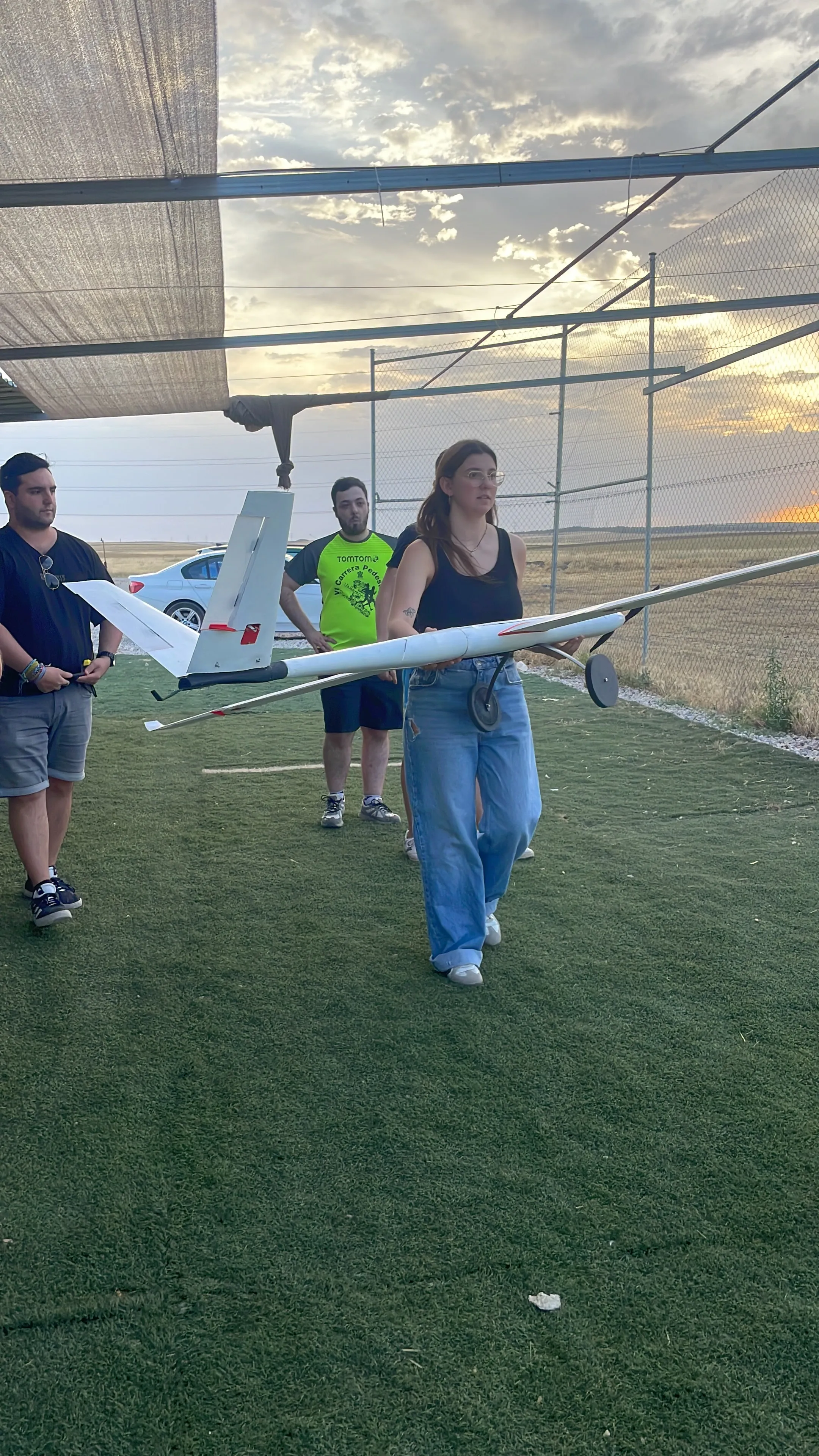
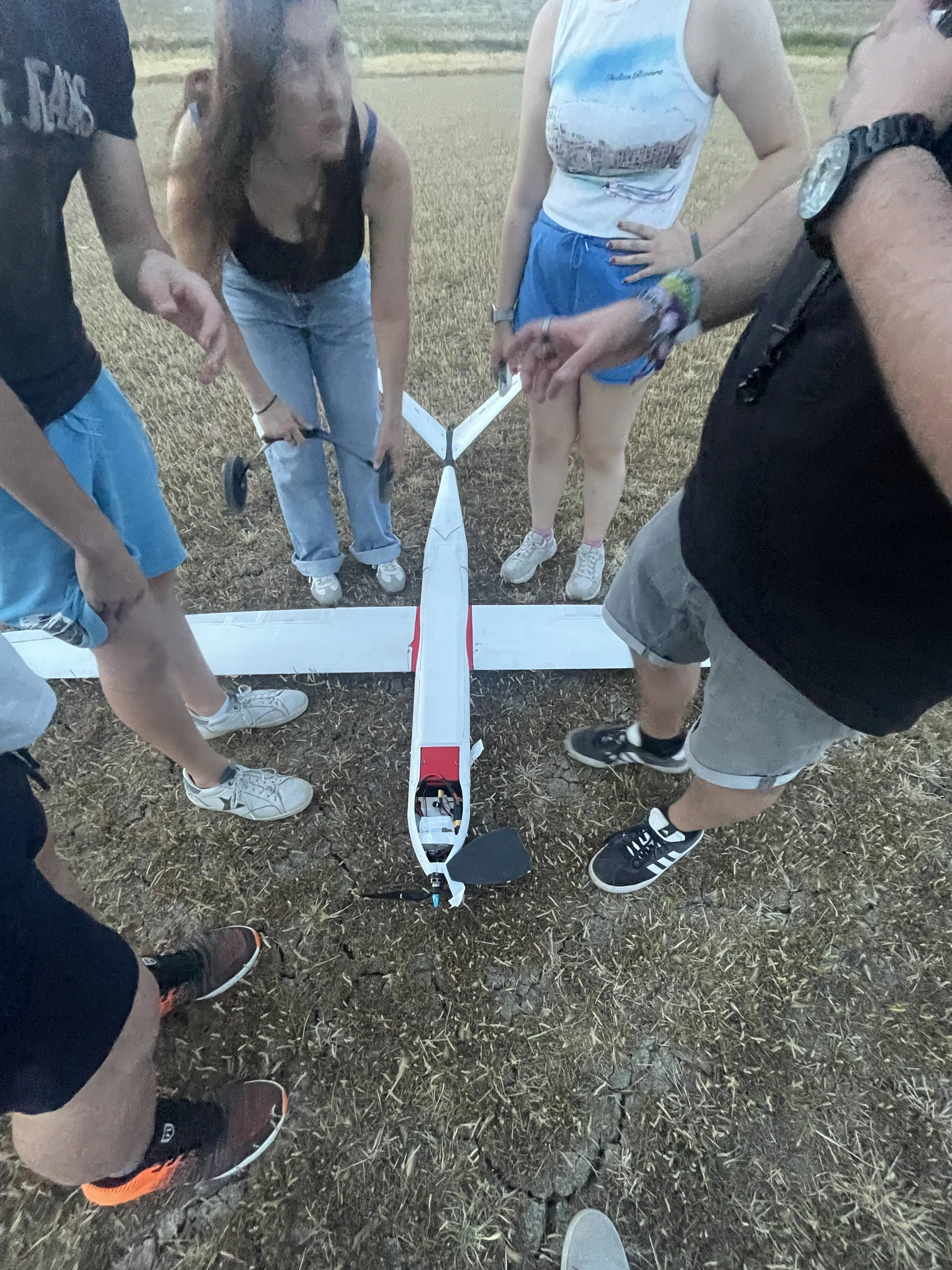
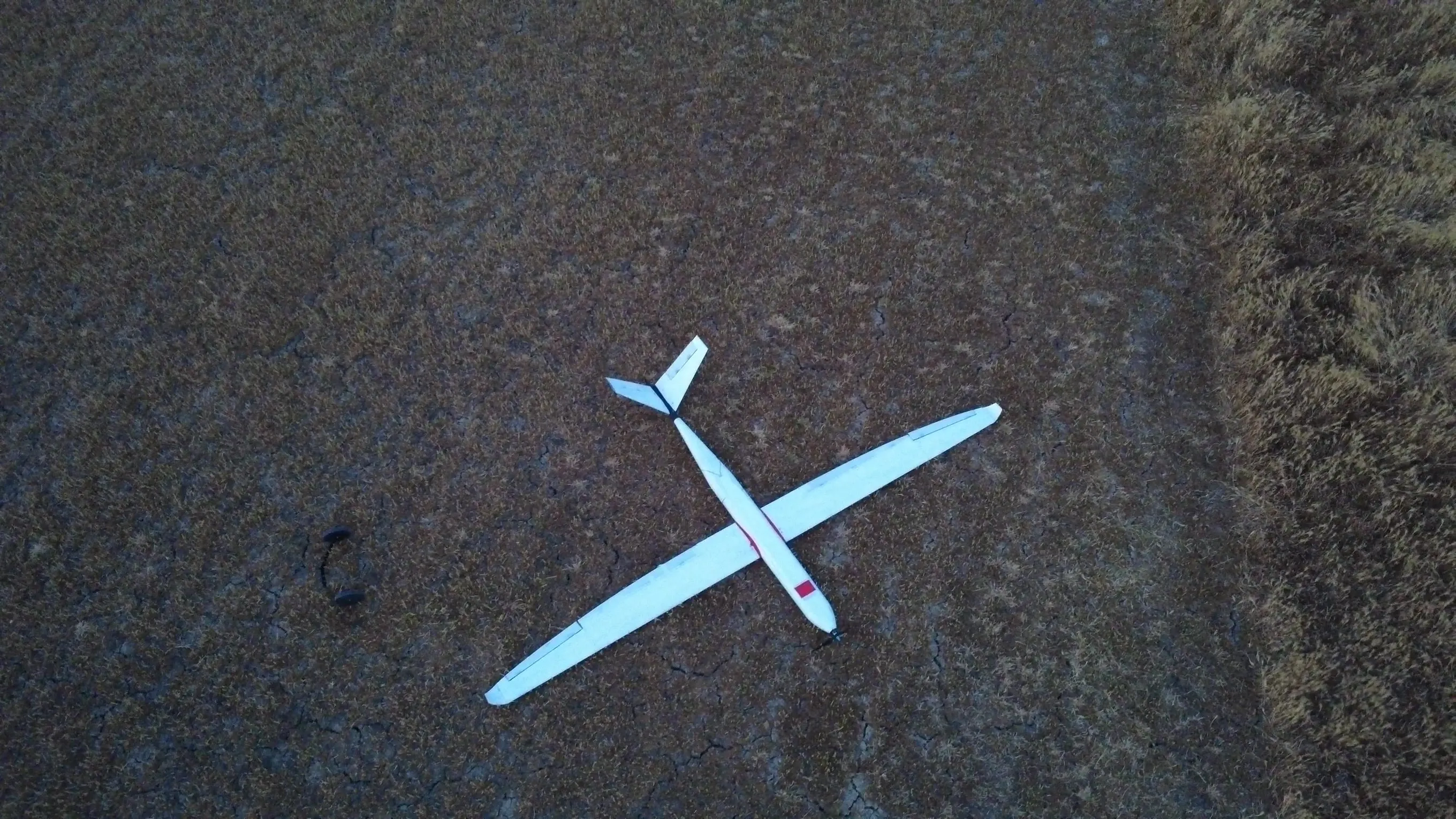
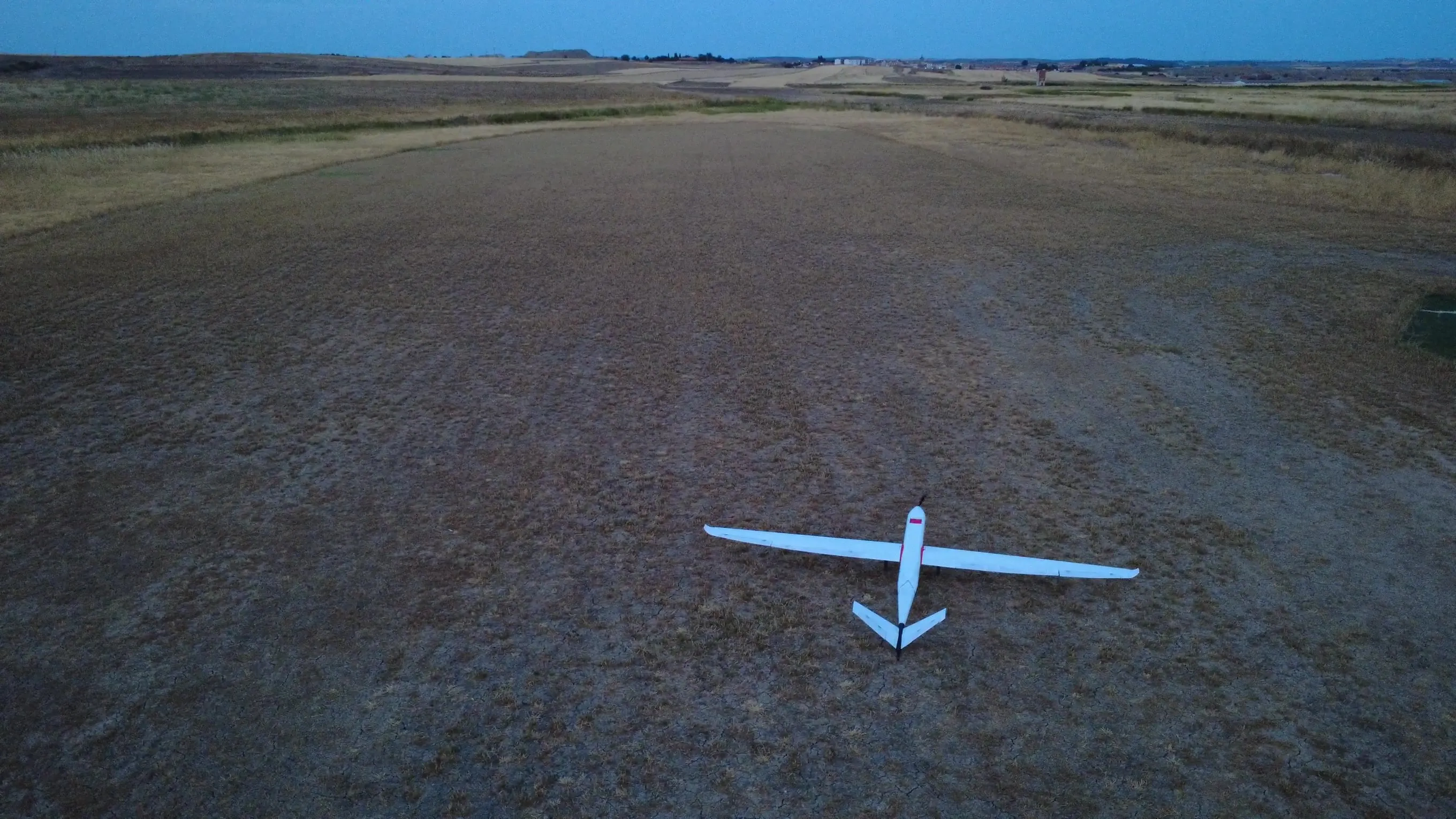
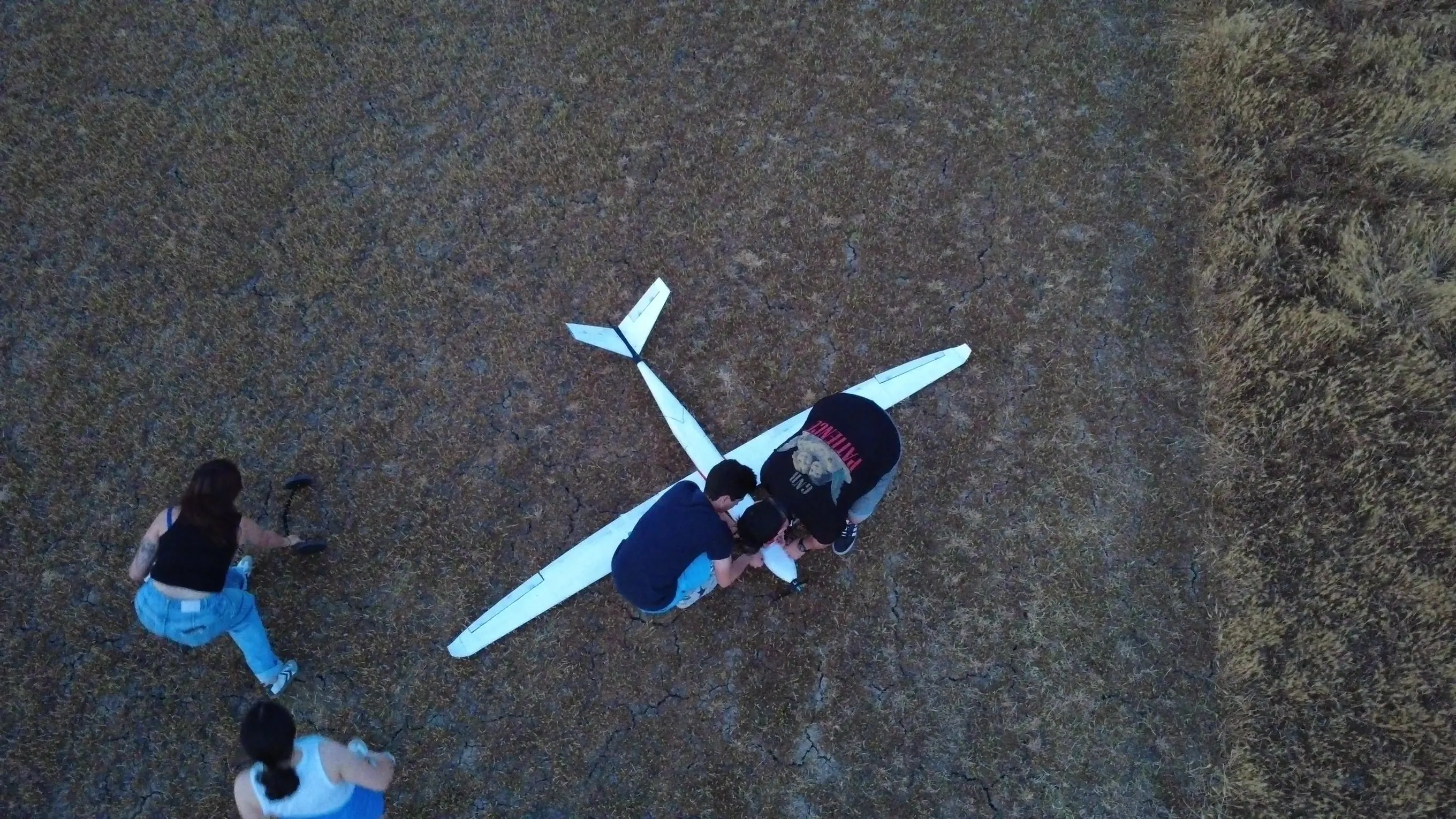
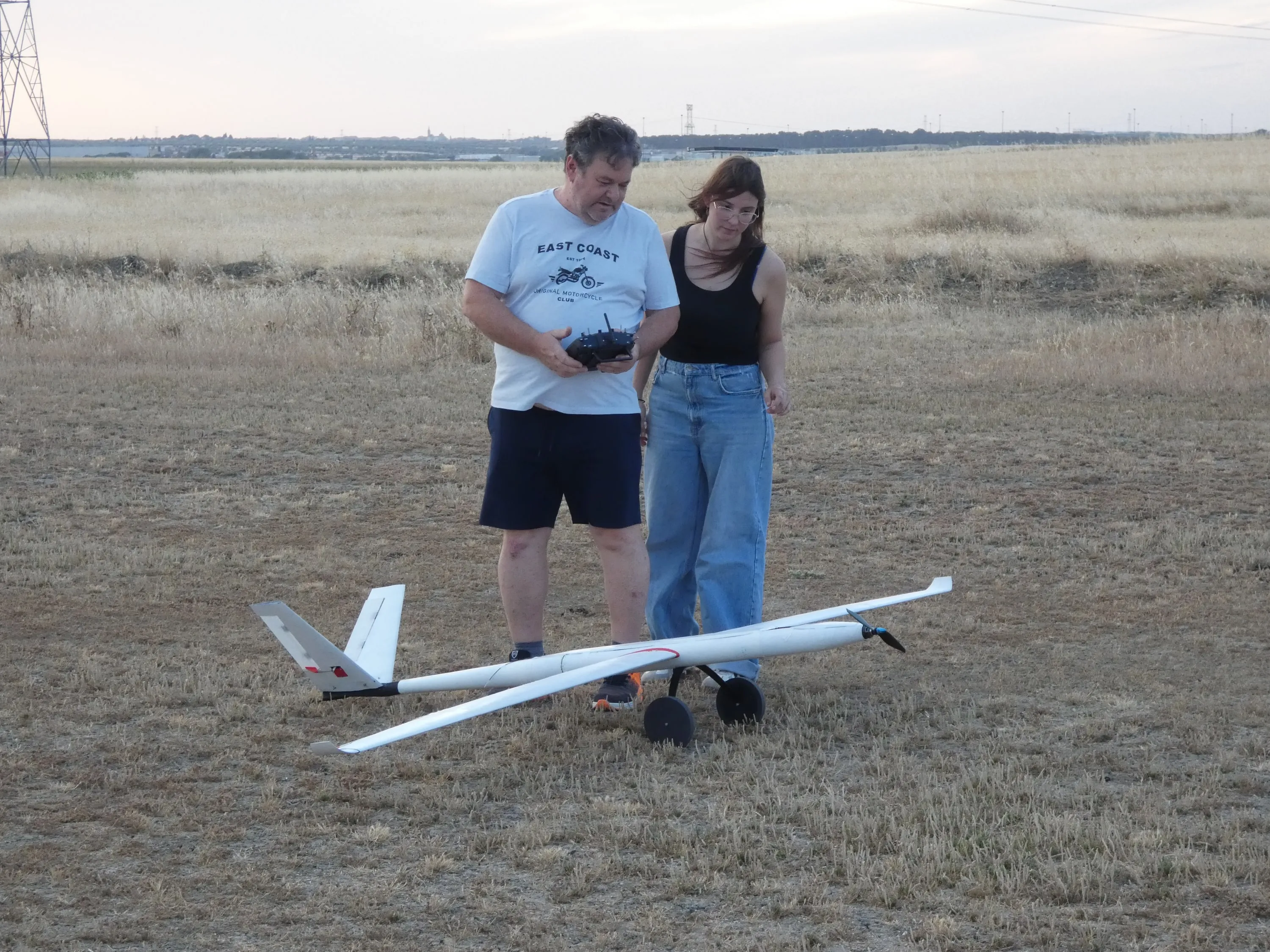
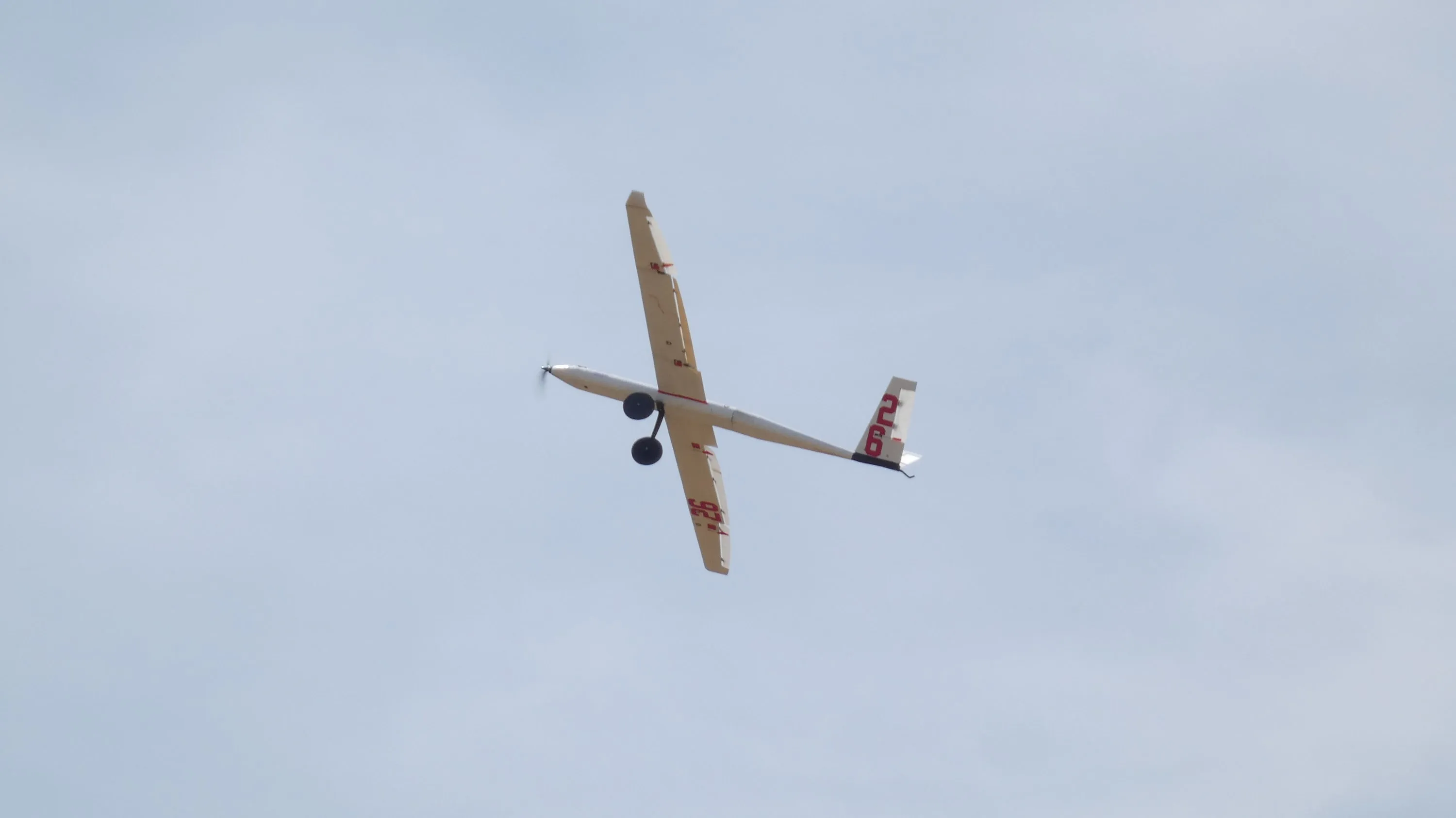
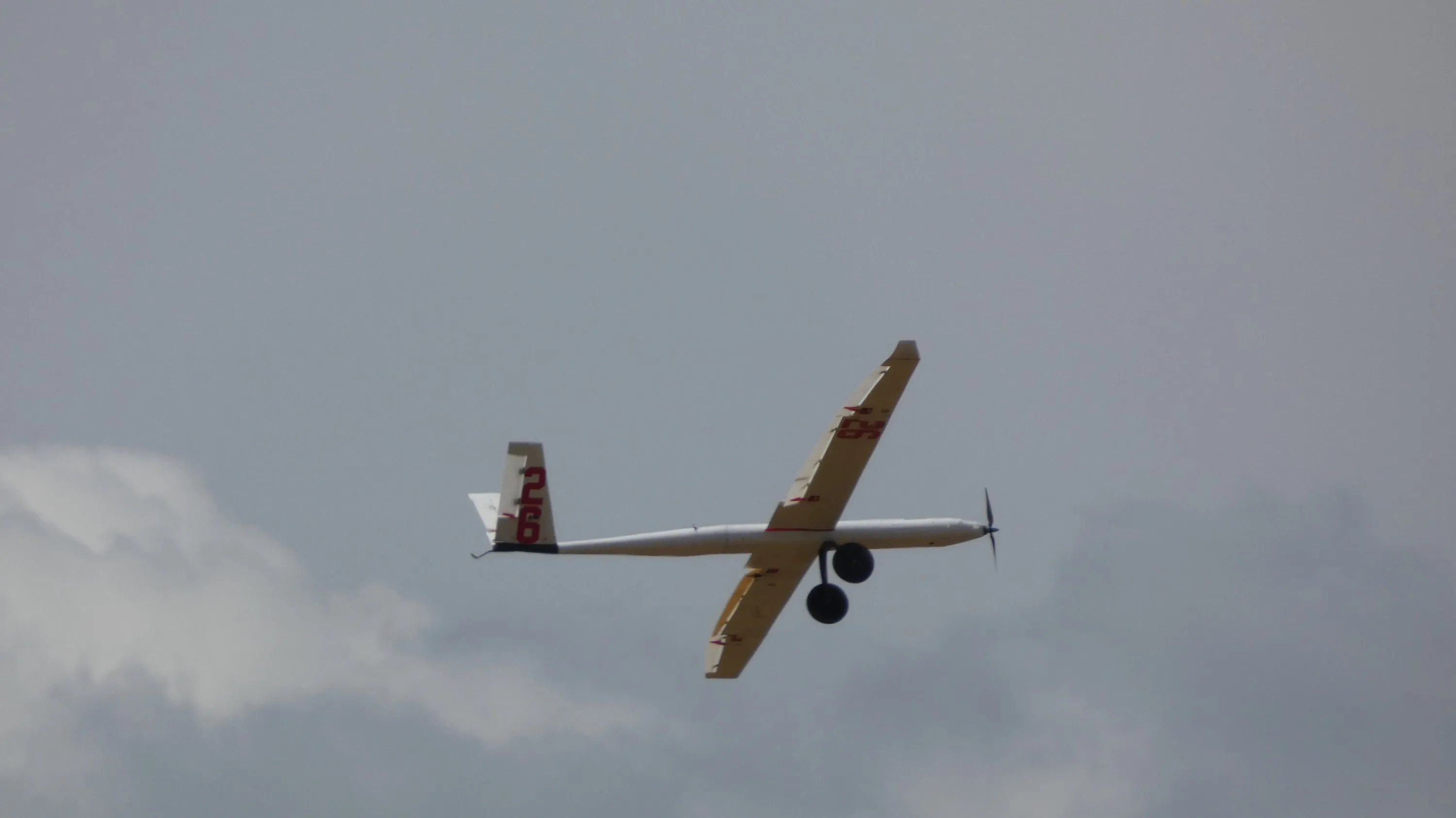
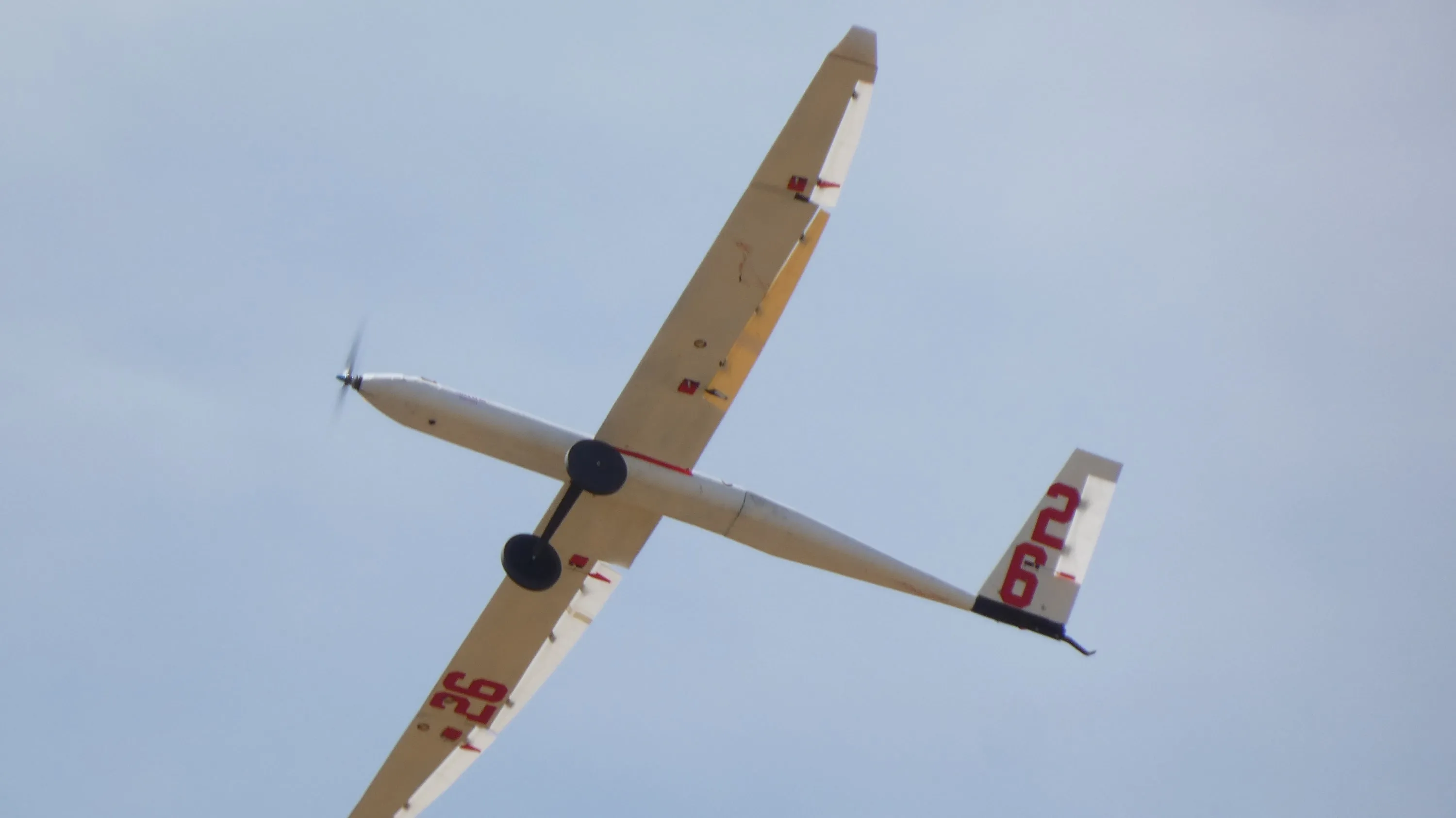
DIANA's first aircraft made entirely of carbon fibre and the largest of its edition. With it, the team made its debut at the Air Cargo Challenge.
- Aircraft
- Eclipse
- Season
- 2025/26
- Competition
- Air Cargo Challenge 2026
- Result
- 25th of 37
- Sheet
- 3 / 3
Technical data
Geometry
| Wingspan | 3,308 mm |
|---|---|
| Root chord | 250 mm |
| Wing area | 0.625 m² |
| Aspect ratio | 14.7 |
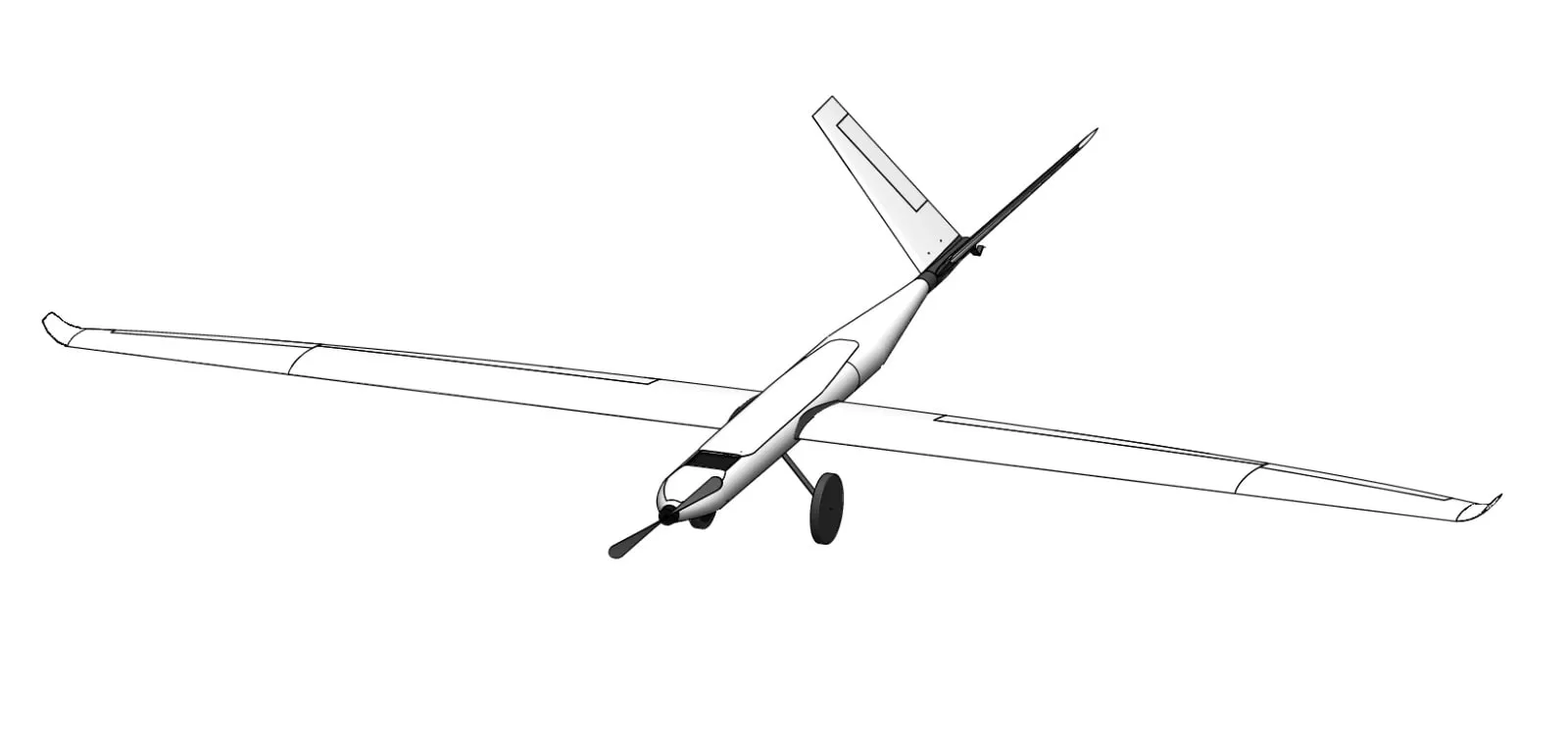
| Planform | Semi-elliptical, with a straight leading edge and an elliptical trailing edge |
| Wing | Mid-mounted, cantilever, no dihedral or twist |
| Incidence | 1° |
| Wing aerofoil | Clark Y at 9 % thicknessVersions at 11, 10 and 9 % were tested; the 9 % one was the most efficient |
| Tail | V-tail, with 45° dihedral |
| Tail aerofoil | NACA 0008 |
Masses
| Empty mass | 3 kg |
|---|---|
| Maximum payload | 8 cans |
| Centre of gravity | 63 mm behind the leading edge empty; 74 mm fully loaded |
| Design load factor | n = 2 at maximum mass |
Performance
| Cruise speed | About 25 m/s, estimated with the MATLAB script |
|---|---|
| Take-off distance | 60 m |
| Payload prediction | In-house MATLAB script that simulates take-off with data from several propellers |
Propulsion
| Motor | T-Motor AT2814 900KVRequired by the rules |
|---|---|
| Propeller | APC 13x8E Thin Electric |
| Speed controller | T-Motor AT 40A |
| Power battery | 3S LiPo of about 3,200 mAh |
| Current limit | 30 A, by the rules |
Avionics
| Flight controller | Matek H743-Wing V3, in FBWA mode |
|---|---|
| Current limiting | At 30 A, with a Matek HSES Hall sensor |
| Bank limit | 35° |
| Ground station | Mission Planner |
| Transmitter | RadioMaster TX16S MKII (ExpressLRS) |
| Receiver | RadioMaster ExpressLRS XR1 Nano, 2.4 GHz |
| Servos | Hacker / Jeti DITEX EL0315M MG, about 15 g and 3.8 kgf·cm at 6 V |
| Avionics battery | 1,000 mAh 3S LiPo, separate from the power battery |
Structure and manufacturing
| Wing skin | Carbon fibre, with double reinforcement at the leading edge |
|---|---|
| Main spar | Rohacell and roving |
| Fuselage | Balsa and birch formers; two-layer carbon skin with 20 strands of 12k roving |
| Moulds | 3D-printed PLA, sanded |
| Lay-up | Resin infusion for almost every part; by hand for complex shapes such as the landing gear |
| Joints | Printed in PACF (carbon-fibre-filled polyamide) |
| Wheels | Printed TPU |
How it was made
Design
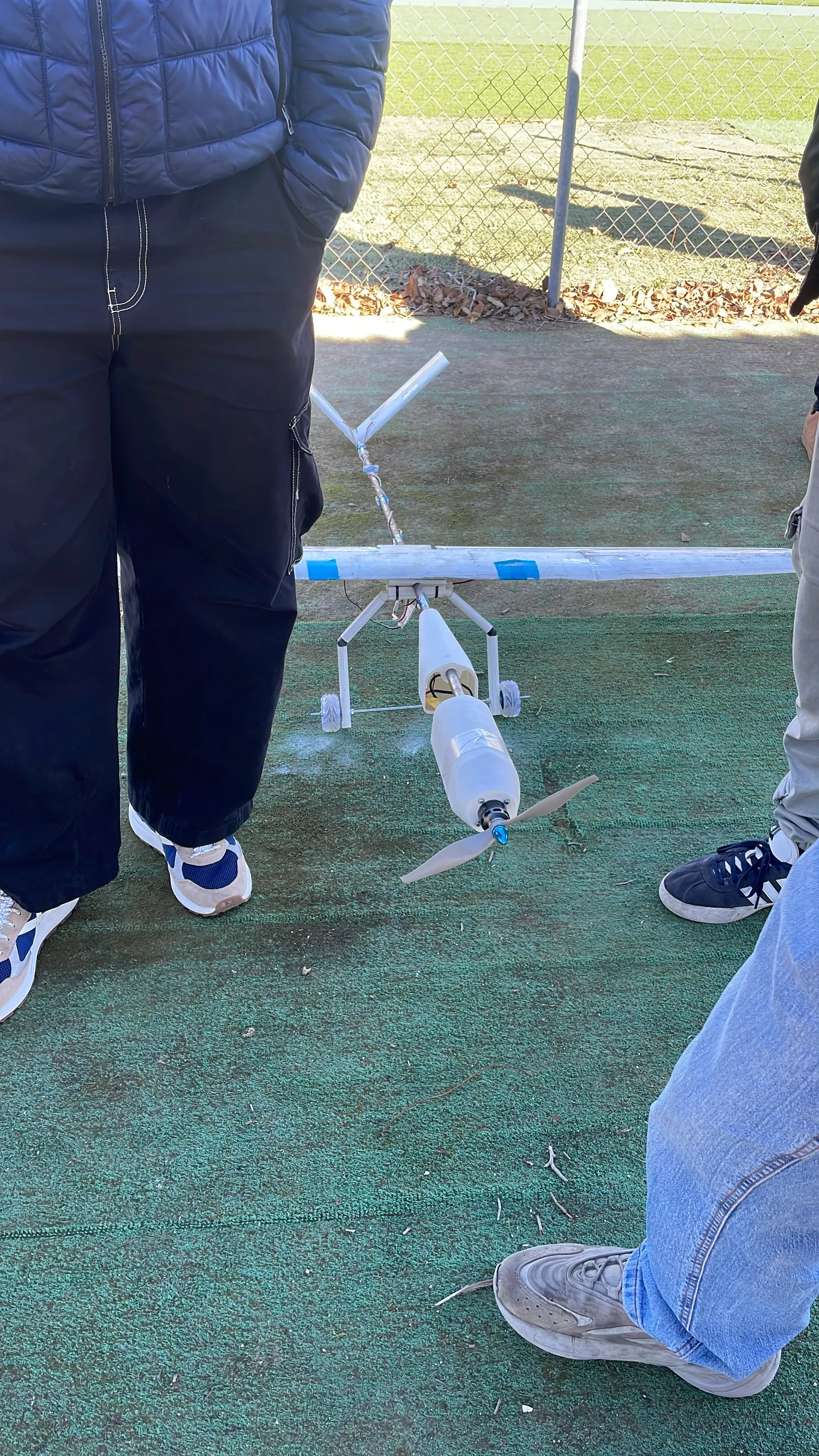
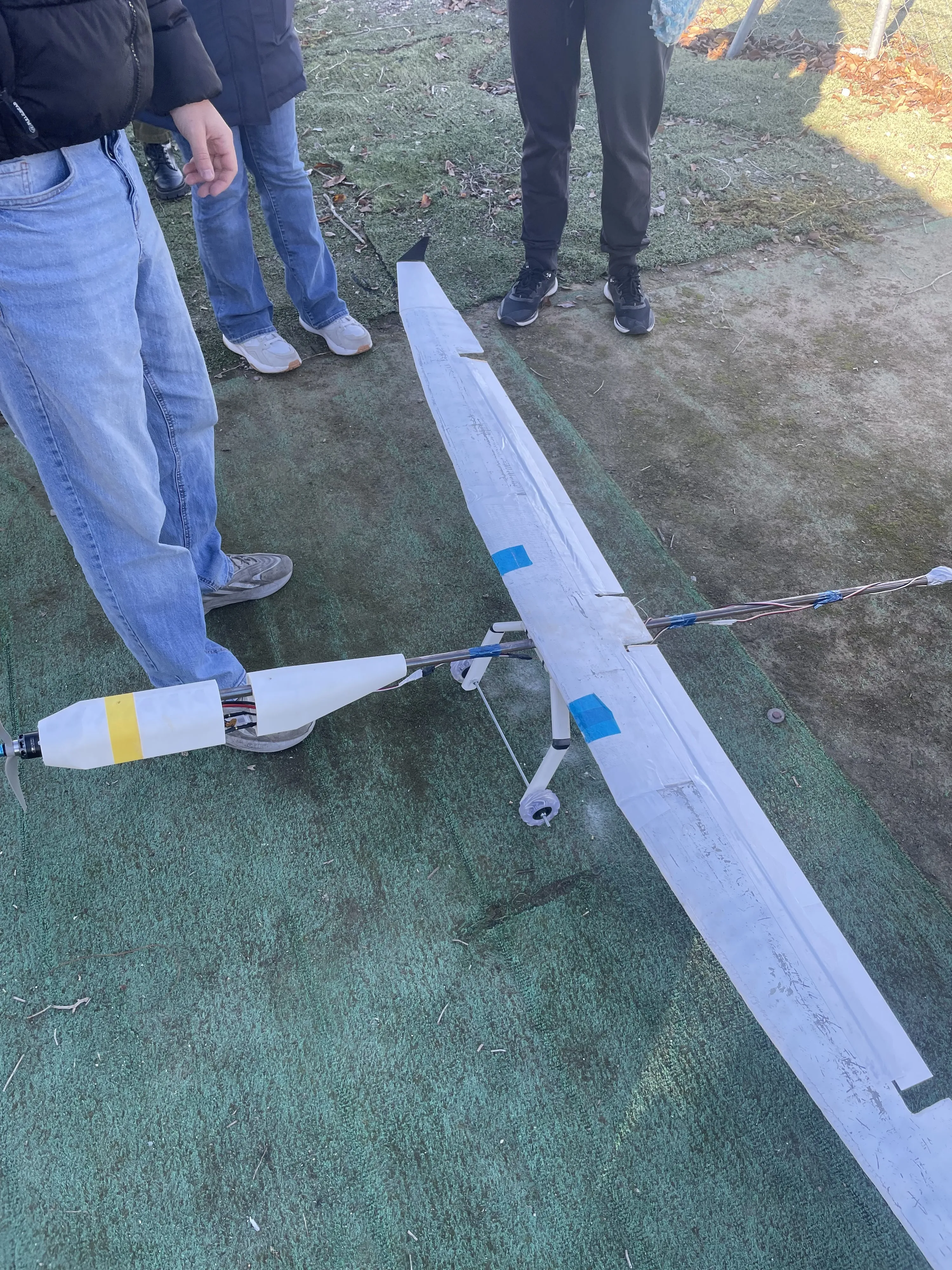
The first version that flew that year was just a wing and a tail joined by a boom instead of a fuselage. The tail looked like Aurora’s, a V-tail with a symmetrical aerofoil and rectangular control surfaces, though somewhat thinner. The wing approximated a semi-elliptical planform with a straight trailing edge and a leading edge made of straight segments, to keep design and manufacturing simple.
It soon became clear that drawing a true elliptical curve and exporting its coordinates to SolidWorks was not that hard. That first wing was compared with the opposite option: a straight leading edge and an elliptical trailing edge. The results were similar, but the second gave slightly less aerodynamic moment. From there the goal was the highest possible aspect ratio: the largest span with a small chord and little thickness.
With the wing settled, the tail was enlarged to balance the moment generated by the wing, and its leading edge was swept back so it was no longer a simple rectangle.
Construction
It was the team’s first year making carbon parts. With the first iteration, and with no budget, the team started experimenting with glass-fibre wings, PLA moulds and hand-applied resin. The result was not good, but it was enough for the first test flight. In that flight the electronics failed again: the motor lacked power.
Then moulds in PLA, plaster, ABS and PVB were tried, looking for what the team’s resources allowed. In the end the team went back to the first option: printed PLA moulds sanded up to 1000 grit.
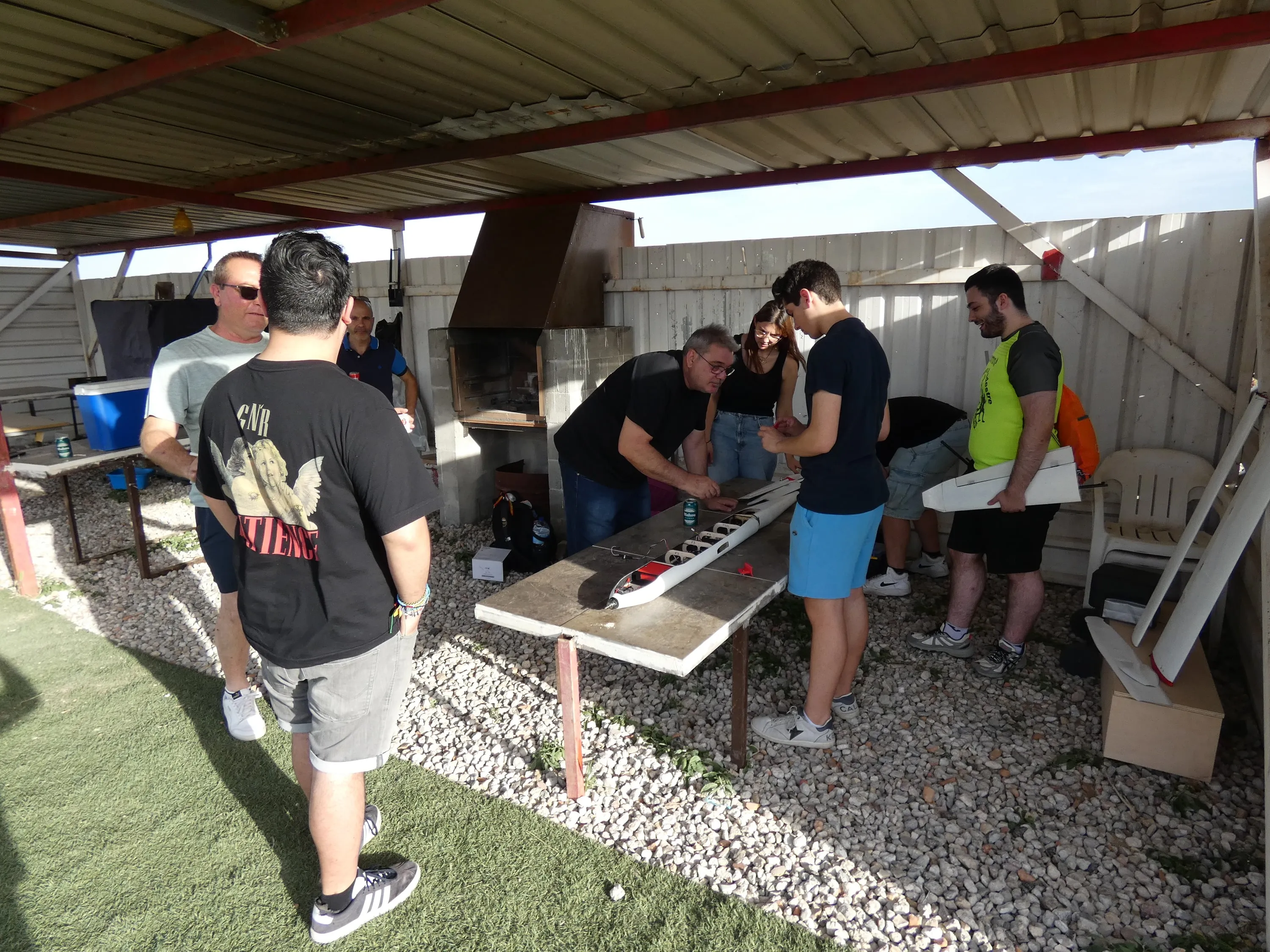
Making only part of the aircraft in carbon was considered, so as not to jump in without experience. But in Stuttgart the team would compete against the best teams, and Eclipse was made entirely of carbon fibre. Resin infusion, the best option without prepregs, took a lot of practice until the parts came out right. The internal structure is balsa, except for the main wing spar, made of roving and Rohacell, and the main fuselage formers, made of Finnish birch model plywood.
What went wrong
- Too much time went into testing types of mould when it was already known that PLA worked. Overall, organisation failed.
- Testing happened very close to the competition. That left less time to improve the aircraft and fewer flights before Stuttgart.
- The design phase dragged on too long. Closing it earlier would have brought everything else forward.
The team lacked experience: a good part of the year went into learning things that were new to it, such as carbon lay-up.
In Stuttgart
The calculations allowed for flying with 8 cans, but the aircraft ended up heavier than planned and carried 2 in every round. One round was completed without the current limiter and did not score; with the limiter, badly calibrated, it scored under 100 points. In the last round, the speed controller with built-in current limiting that was fitted, calibrated with help from the Munich team, burned out in flight for lack of a proper heat sink, and the aircraft had to make a forced landing.
Eclipse finished 25th of 37 at the Air Cargo Challenge 2026. All the flights are on the competition page.